
00:00:00 AM
Death Stranding
A story to reconnect with the world and your free time
In a medium that pursues perpetual stimulation, Kojima built something radically different: an experience that demands patience and rewards contemplation.

There is a particular irony in how we have learned to consume our leisure time. Modern video games, like much of today’s digital ecosystem, are calibrated for immediate impact: bursts of color, constant rewards, perfectly tuned dopamine loops. Every second must justify itself with stimulation. Every pause is treated as a design flaw.
Beyond this, we have normalized something more insidious than mere stimulus addiction: the inability to be present even within our own leisure. We watch series with our phones in hand, catching only fragments of what unfolds on screen. We play while scrolling through feeds between missions. We read, interrupted by notifications every other paragraph. Fragmented attention is no longer an occasional problem — it has become our default state, even when we consciously choose to rest.
In 2019, Hideo Kojima released something that confronted both sides of this problem head-on. Death Stranding was received with puzzlement by a significant portion of its audience. “A walking simulator,” they said. “Boring,” they concluded. And technically, they weren’t entirely wrong. But perhaps that is, precisely, Kojima’s greatest masterstroke.
A Film You Play
Before venturing into what Death Stranding offers as an experience, one preconception must be dismantled: this is not a conventional video game. It is, above all, an interactive cinematic work built with the narrative rigor and visual ambition of a major production.
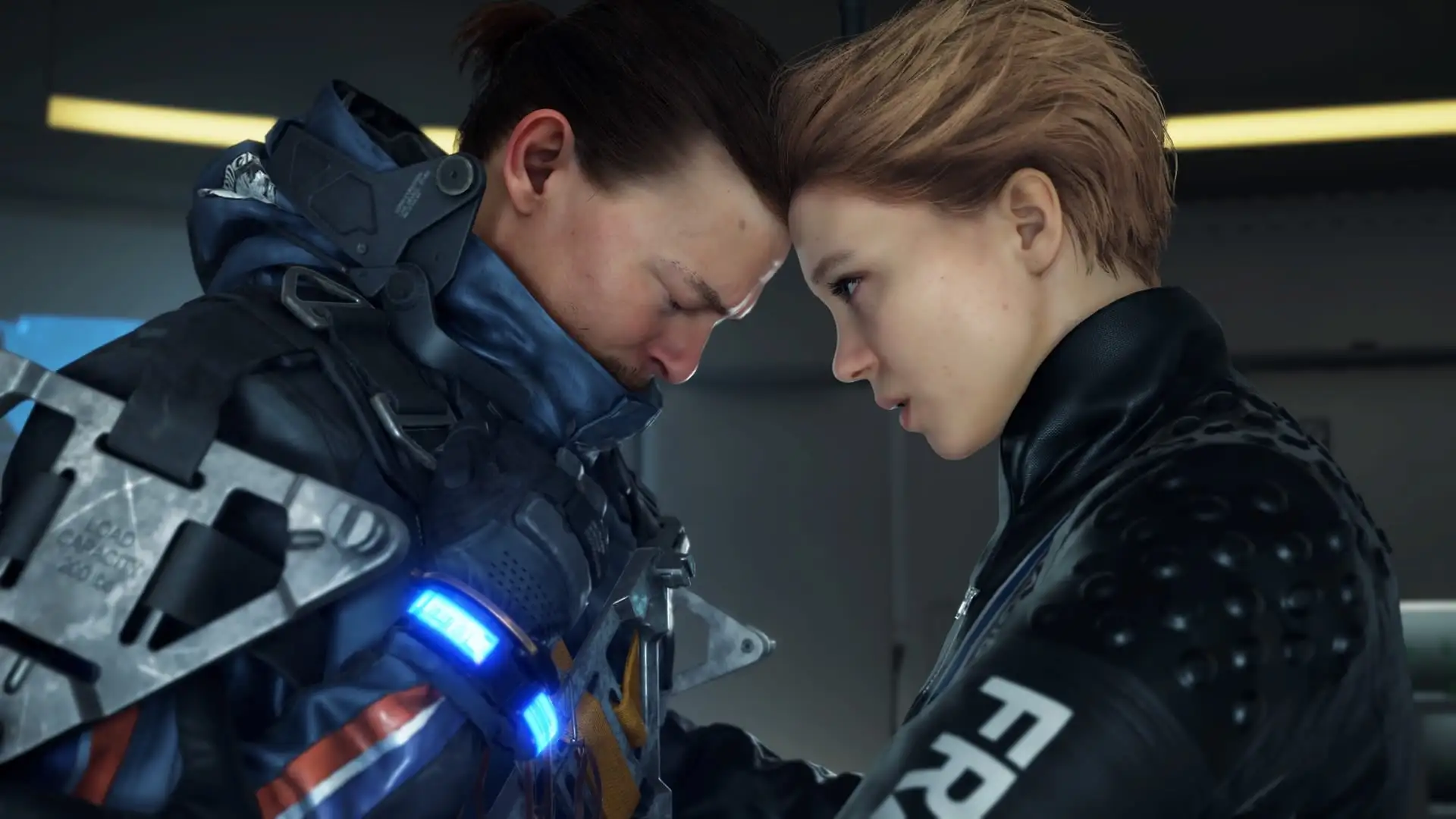
Kojima Productions assembled a cast that few Hollywood projects could afford: Norman Reedus as the protagonist, Mads Mikkelsen in a role that could well merit an Oscar, Léa Seydoux, Margaret Qualley, Guillermo del Toro… These are not mere digitized faces; each character they embody brings a depth of performance that elevates the experience far beyond what the medium typically offers.
Kojima’s direction is deliberate, almost obsessive in its command of pacing and atmosphere. Every cutscene is choreographed with the same precision a film director would bring to their craft. If you come to Death Stranding, you will not find a game in the traditional sense. You will find a narrative to be experienced, not consumed.
Beauty in Desolation
There is a tradition in Japanese culture that Kojima never explicitly declares, yet it permeates every frame of Death Stranding: mono no aware — that melancholic sensitivity to ephemeral beauty, to the impermanence of things.
Kojima may not reach the mastery of other Japanese auteurs in this domain — Hidetaka Miyazaki, for instance — but in Death Stranding he draws remarkably close. The world he presents is broken: literally a post-apocalyptic United States shattered by a cataclysm that has dissolved the boundary between life and death. And yet, it is breathtakingly beautiful.
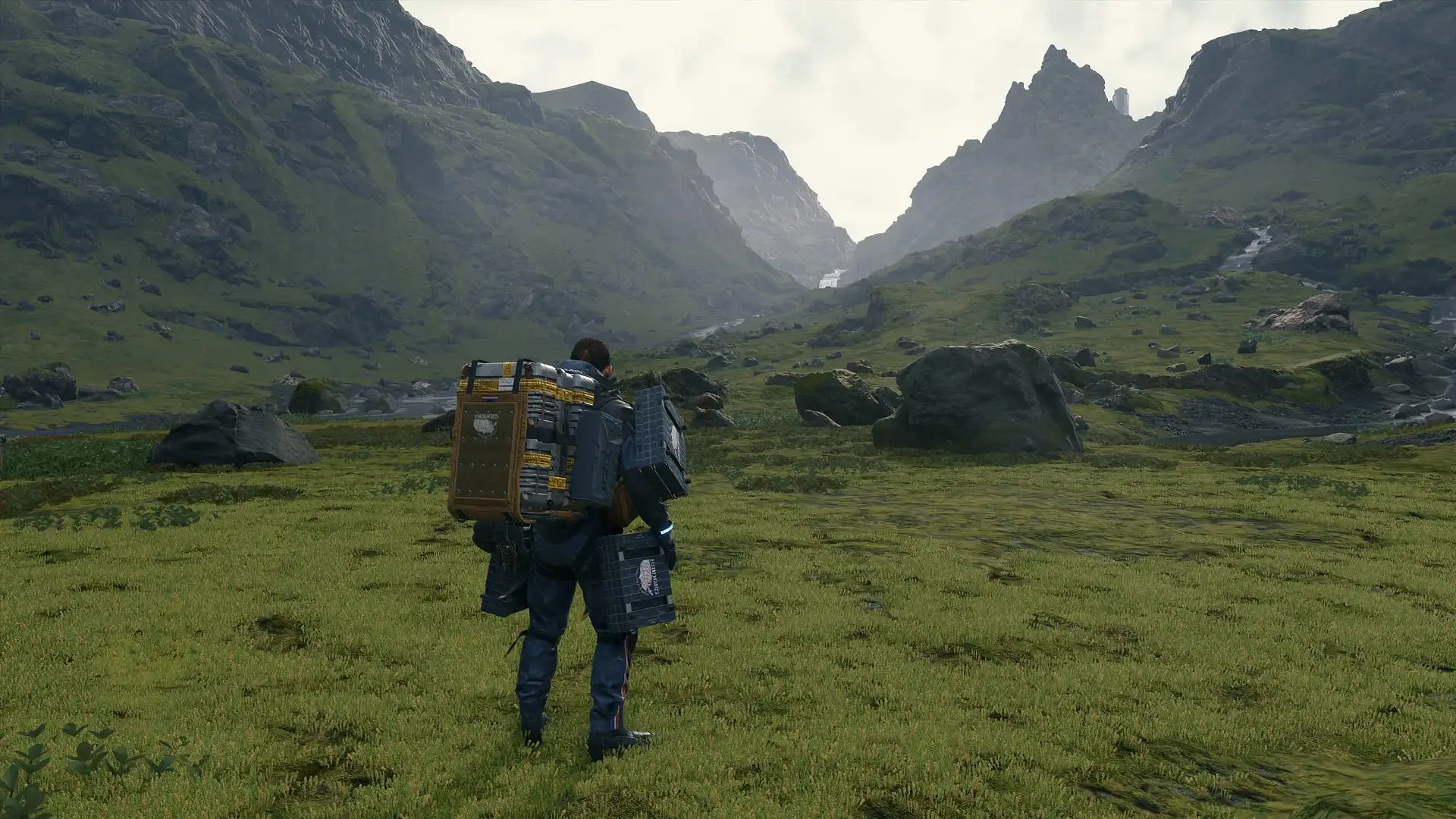
The desolate meadows, the jagged mountains, the valleys flooded by a temporal rain that ages everything it touches — each landscape is designed not to be hurried through, but to be contemplated.
The soundtrack deserves particular mention. Kojima does not use music as mere ambient filler. He reserves it for specific moments, transforming it into emotional reward. When, after scaling a mountain for long minutes through rain or snow, the sky finally clears to reveal your destination on the horizon — the camera pulling back to widen the frame as a rainbow emerges and the first notes of Silent Poets or Low Roar begin to rise — the experience ceases to be merely interactive and becomes something contemplative.
This is not cheap manipulation; it is the deliberate crafting of transcendent moments. The game compels you to earn those instants of beauty through patience and dedication.
A Different Kind of Gameplay
In Death Stranding, you are Sam Porter Bridges, a courier whose mission is to reconnect a shattered America by carrying cargo from one point to another. You walk. You plan routes. You manage the balance of your load. You navigate uneven terrain. You build ladders, ropes, bridges… And then you walk some more.
For a medium conditioned by decades of design oriented toward constant stimulation, this is heresy. There are no skirmishes every three minutes. No bosses lurking around every corner. Killing, in this game, triggers irreparable consequences. In Death Stranding, there is no relentless frenetic action — instead, there are long stretches of time where all that exists is the sound of your footsteps on the grass, the weight of the cargo on your back, and the horizon drawing slowly closer.
The initial reaction for many players is rejection. “This is boring.” And it is, if measured against the metric of perpetual dopamine. But Death Stranding does not compete in that space. It proposes something radically different: the reward of conscious effort, the satisfaction of the journey as an end in itself.
When you finally reach your destination after an hour of planning, perseverance, and overcoming obstacles, the emotional release does not come from a graphical spectacle or a points system. It comes from something more primal: achievement earned through sustained attention and deliberate dedication.
Metaphors for an Age of Disconnection
Beyond its formal proposition, Death Stranding articulates something profoundly relevant: a meditation on human connection in an era of fragmentation and isolation.
The narrative premise could not be more literal. The “Death Stranding” — the cataclysmic event that shattered the world — has isolated its people. Communities no longer exist, only individuals sheltered in underground bunkers, terrified of the outside. Sam’s mission is, literally, to rebuild the invisible threads that make society possible.
Kojima is not subtle with his metaphors. In a world where technology promises infinite connection yet delivers refined isolation, Death Stranding insists that reconnection demands physical effort, risk, vulnerability. Pressing a button is not enough; you must cross hostile terrain with weight upon your shoulders.
The game also features an atypical cooperative system — one without direct contact — a perfect metaphor for how humanity advances: building upon what others have left behind, easing the path for those who will follow. In a medium obsessed with competitiveness and aggressive multiplayer, Death Stranding proposes something almost utopian: silent collaboration as a fundamental act of humanity.
An Invitation to Reclaim Stillness
Death Stranding is not for everyone. And that, perhaps, is its most honest declaration. Kojima built something that demands a different contract. It does not ask for reflexes; it asks for patience. It does not seek to entertain you constantly; it seeks to have you immerse yourself deliberately.
If you come to Death Stranding expecting a conventional game, you will be frustrated. But if you approach it for what it truly is — a contemplative piece about connection, effort, and beauty in a broken world — you will discover something increasingly rare: an experience that demands your full presence.
At a time when our leisure is colonized by designs engineered to keep us perpetually stimulated, perhaps the most subversive thing we can do is consciously choose what asks for stillness — what rewards contemplation, what restores our capacity to enjoy the journey for its own sake.
Death Stranding is not perfect. It has narrative excesses, moments of deliberate confusion, questionable design choices. But at its core beats something profoundly necessary: a reminder that conscious boredom, deliberate slowness, and sustained patience are not flaws to be eliminated, but capacities to be reclaimed.
Would you like to dive deeper into the ideas of this article?
If you have made it this far, you may have a question or feel like continuing to reflect. You can chat with a conversational assistant to dive deeper into the content.
Your conversations will be 100% private and will not be stored.